
Reforestation
Sustainable reforestation protects ecosystems, preserves tree populations, and strengthens forests against climate change.
Overview of Afforestation
As early as 300 years ago, the Saxon Chief Mining Officer Hans Carl von Carlowitz laid out the basic principles of sustainability in his *Sylvicultura oeconomica*. Only as much wood should be harvested as will grow back (quote).
If areas do end up being deforested, they are reforested accordingly. In this process, environmental factors, the site, the seeds, and many other factors must all work together to create a new forest.
Depending on the requirements, the area can feature a tiered edge with space for insects and small mammals, or it can be used to create a traditional, climate-resilient mixed forest.
For everything to work, a good balance must be struck between nature and technology.
Lightfoot Harvesting offers you not only highly expert advice but also a wide selection of machinery and methods.
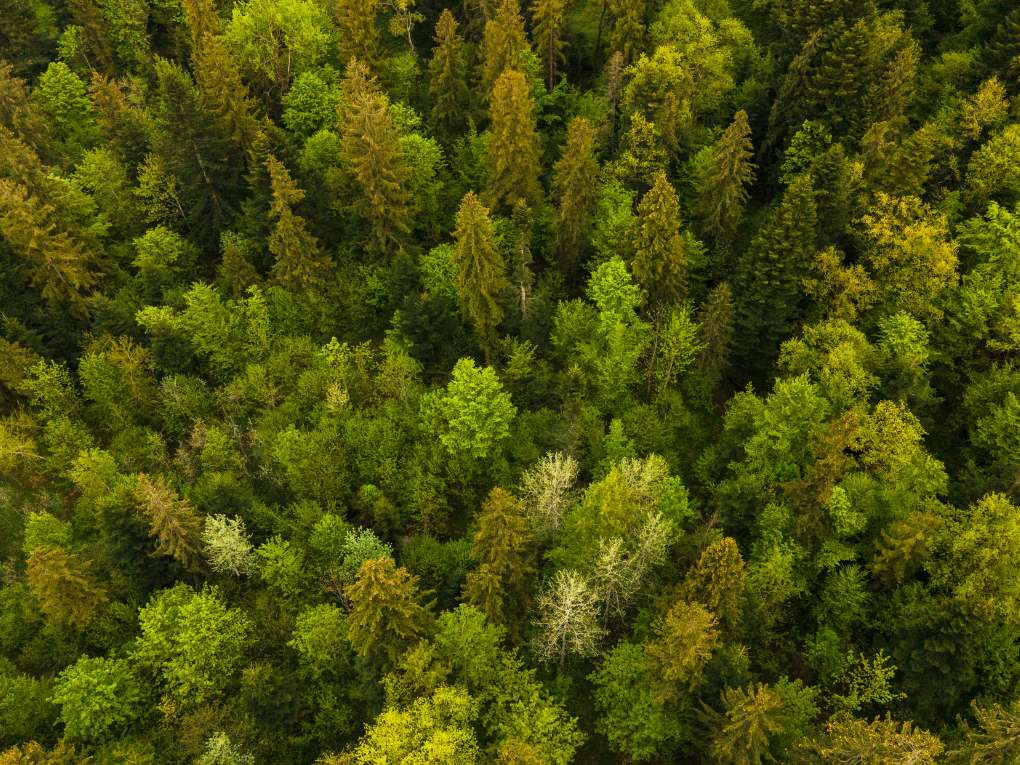
What does reforestation mean?
Reforestation is the deliberate planting of new trees in an area that has lost its forest cover due to natural or human causes.
In the modern world, this can have a wide variety of causes. When industrial areas expand, solar farms are established, or wind turbines are built, companies may be required to carry out compensatory reforestation. For this purpose, non-forested land or other areas are set aside and reforested in accordance with the guidelines and local conditions.
Reforestation Goals
The goal of reforestation is to restore forested areas or to generate ecological, economic, and social benefits. Various objectives determine the focus and structure of the reforestation effort. Depending on the specific requirements, the focus may be on soil, climate, water, species, or environmental protection.
Customer Testimonials
Do you need help from experts?
We are here to provide expert assistance with all your reforestation needs. Schedule a no-obligation consultation today and benefit from our experience and state-of-the-art technology.
How do we go about reforestation?
First, the environmental factors and the area to be reforested must be determined. These include annual precipitation, temperatures, frost, etc., as well as soil characteristics such as fertility levels and composition. Next, a concrete plan is drawn up to meet these requirements. This plan must take into account the selection of tree species, planting patterns, and seed origins. Once planning is complete, all components are procured and delivered to the site. The reforestation must then be inspected and approved, and protective measures against wildlife should be implemented. In particular, beech and oak seeds sown on the site are often consumed by wild boars in the spring. Therefore, mechanical protection (e.g., fencing the area) or chemical protection (e.g., applying wildlife repellents) is essential in areas with high wildlife populations.
Sustainable Forestry and Reforestation
Sustainable forest management is firmly rooted in the principles of current forest laws. However, the interpretation of these laws varies depending on the user, which can lead to significant differences.
One thing should be clear: We want to preserve and nurture the forest. This requires specific forestry expertise and skills.
Measures such as reforestation offer countless opportunities to shape the forests of tomorrow. By selecting specific tree species or using mixed plantings, forests can be adapted—directly or indirectly—to climate change. In doing so, it is important to consider the effectiveness of the intervention. It is now possible to carry out targeted forest restructuring—moving away from monocultures toward species-rich deciduous and mixed forests.
As human beings, we have a duty to preserve nature. We can take action when forests disappear or are cleared. We can reforest.
Do you need help from experts?
We are here to provide expert assistance with all your reforestation needs. Schedule a no-obligation consultation today and benefit from our experience and state-of-the-art technology.
Preventive Measures Instead of Reforestation
To avoid the need for reforestation, certain measures can be taken within the forest. With targeted forest management, creating clearings for potential regeneration is a viable option. This saves on the costs of reforestation following losses due to damaging events, since the forest naturally regenerates on its own. If a decline in the existing tree species is foreseeable, it is also possible to plant new trees under the canopy of the old trees so that the new stand can grow up protected.
However, when forested areas are located in close proximity to industrial zones with potential for expansion, preventive measures to preserve the forest are often difficult to implement. Nevertheless, there are ways to at least safeguard the forest’s genetic material. This would involve propagating cuttings or distributing seeds to other areas.
Of course, uneconomical requirements can also be imposed on industry as compensation for deforestation, and in return, other, non-forested areas can be put up for bid.
Macroeconomic Effects of Reforestation
Every measure taken in the forest and in the private sector should result in a positive cost-benefit analysis. Therefore, measures and their long-term benefits must always be weighed against one another.
It is often difficult to see the value of a newly reforested forest, since it takes decades before a significant yield can be generated. Furthermore, the forestry business is characterized by constant risks such as droughts or storms, which can lead to losses across the entire area.
However, it is important to keep in mind that these areas will shape the region’s forest landscape in the future and also fulfill important protective functions, such as soil, climate, water, species, and environmental protection. Accordingly, this one-time, large-scale investment should be viewed as absolutely essential in the long term.